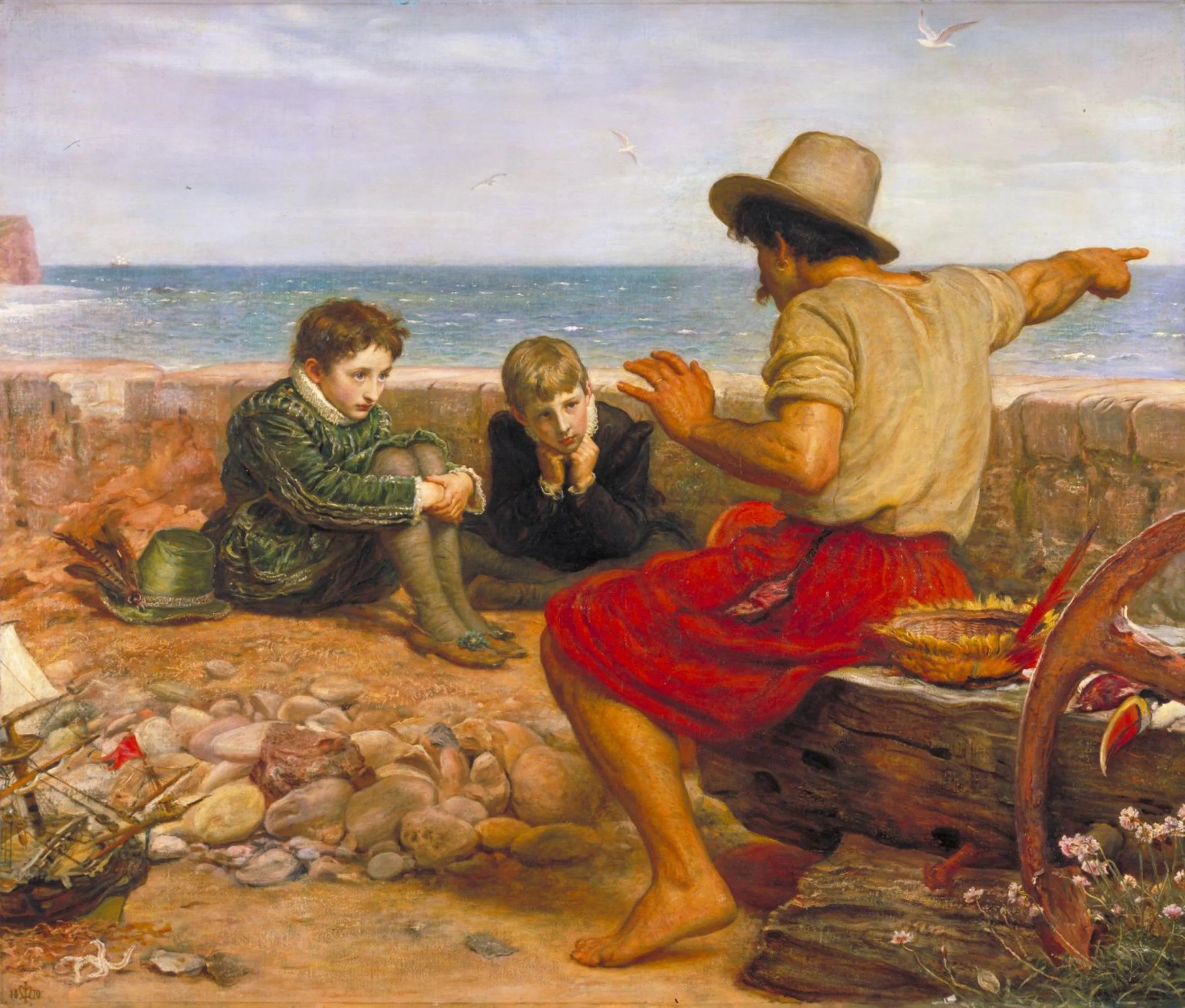
Sir John Everett Millais' The Boyhood of Raleigh
Sir John Everett Millais’ ‘The Boyhood of Raleigh’
In my book The Quest for El Dorado I write about the Victorian lens through which the life of Sir Walter Ralegh attained its romantic hue, in particular from Charles Kingsley’s novel Westward Ho! and Sir John Everett Millais’ painting ‘The Boyhood of Raleigh’ – one of the best-known paintings by a member of the pre-Raphaelite movement. The subject was suggested to Millais by reading an 1852 essay by James Anthony Froude called ‘England’s Forgotten Worthies’, in which Froude wrote that Ralegh ‘probably listened to many tales of foreign climes and of the wonders to be seen there’ while growing up near the Devon coast.
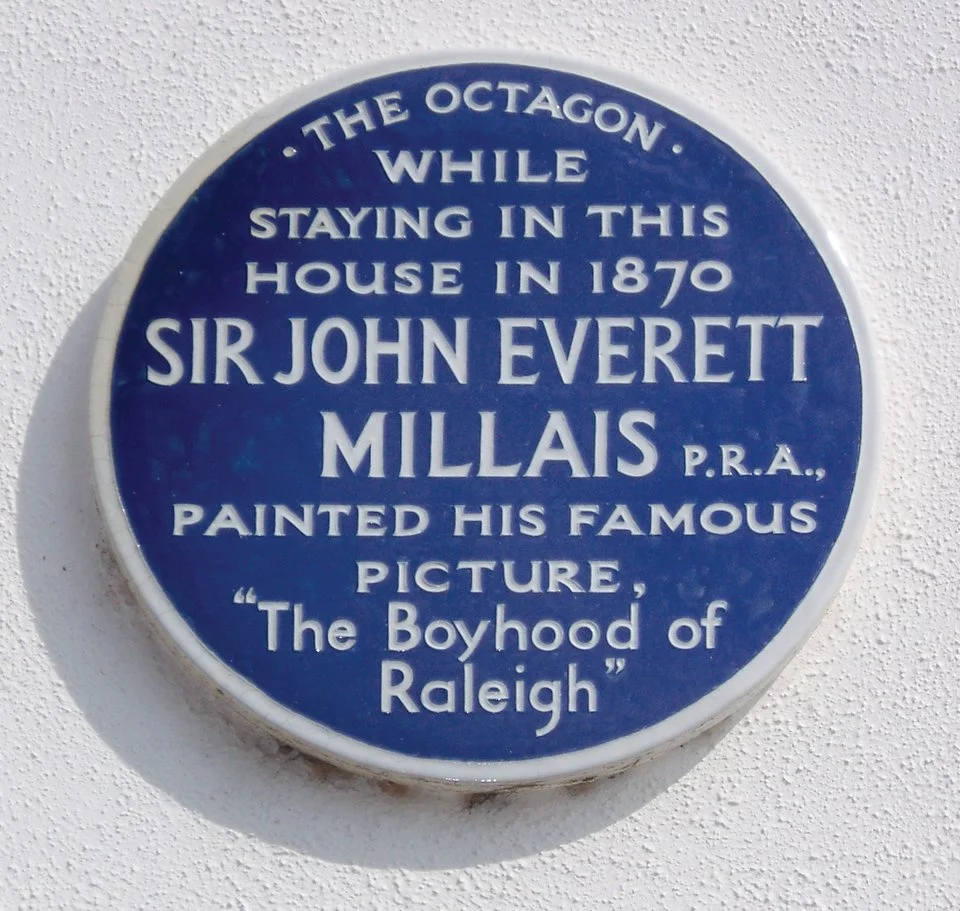
In 1870 Millais rented a seaside house at Budleigh Salterton, only two miles as the crow flies from Hayes Barton, Ralegh’s birthplace, intent on creating a painting that would represent this aspect of Ralegh’s childhood. He worked in a studio on the ground floor with a view of the sea wall some 20 yards away that would form the setting of the painting. As models for Ralegh and his brother he used his sons Everett and George, and for the swarthy mariner a local sailor named Vincent originally from Jersey whose dark features could pass as Genoese or Spanish. Both the house and the sea wall still exist and are marked by plaques commemorating the painting, which was displayed at the Royal Academy and since 1900 has been part of the Tate collection.
The association with Westward Ho!, published in 1855 and a big bestseller, was made by a number of critics, including a Mr Stephens quoted by Millais’ son John Guille Millais in his biography of his father, describing the ‘Genoese’ sailor as ‘one of those who were half pirates, half heroes, such as Kingsley has delighted countless boys by describing …The young Walter sits up on the pavement, and with his hands locked above his raised knees, and with fixed, dreaming eyes, seems to see El Dorado …’ Kingsley himself imagined the young Ralegh looking down from one of the Dartmoor heights ‘upon the far blue southern sea, wondering when he shall sail thereon, to fight the Spaniard, and discover, like Columbus, some fairy-land of gold and gems.’
I have a family connection with Millais – my great-great grandmother, Octavia Everett, who married John George Gibbins, had an uncle named William Hart Everett who married Anna Maria Millais, Sir John Everett Millais’ aunt. In recognition for assistance given to him by his brother-in-law, Millais’ father John William Millais gave his son the middle name Everett. The name passed down through my family as well, with my great-grandfather named Arthur Everett Gibbins and my great-uncle Harry Everett Gibbins. The connection doesn’t go much beyond that, but it does mean that I grew up with a particular interest in Millais and his paintings!
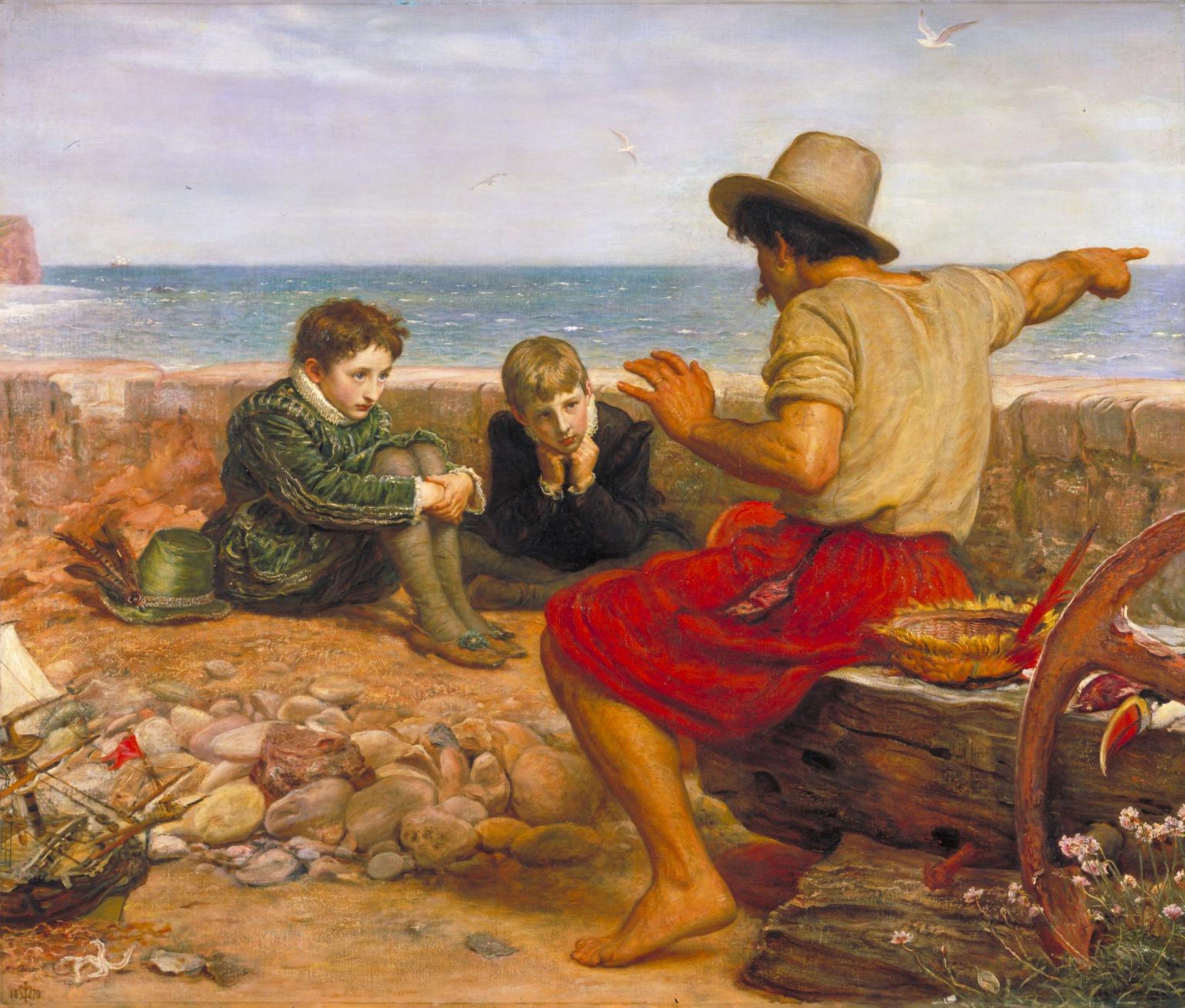
Sir John Everett Millais’ ‘The Boyhood of Raleigh’ (The Tate Gallery).
A sketch made by Millais for the painting, with the sailor sitting in a chair rather than on a timber (in John Guille Millais’ The life and letters of Sir John Everett Millais, Vol. 2, 1899).
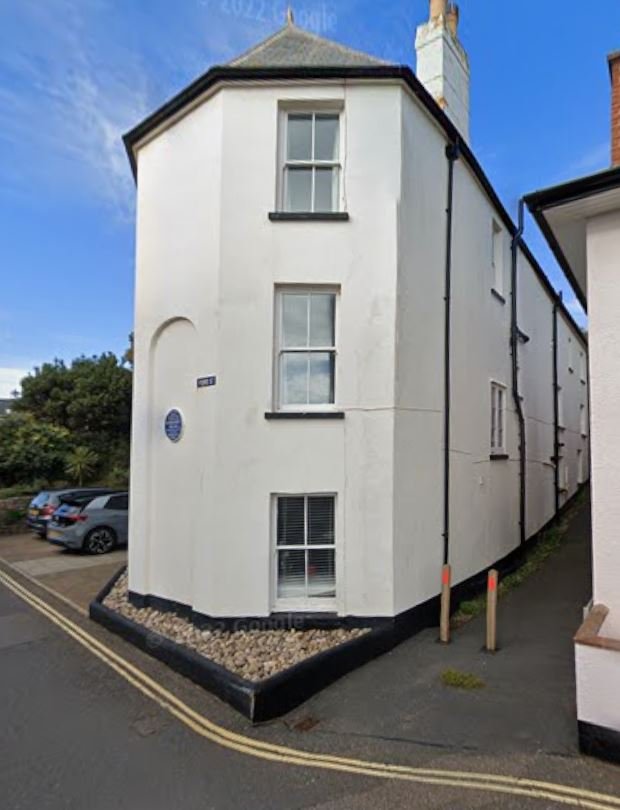
Octagon House, Budleigh Salterton. Millais’ studio was on the ground floor with the window looking out on the sea wall.
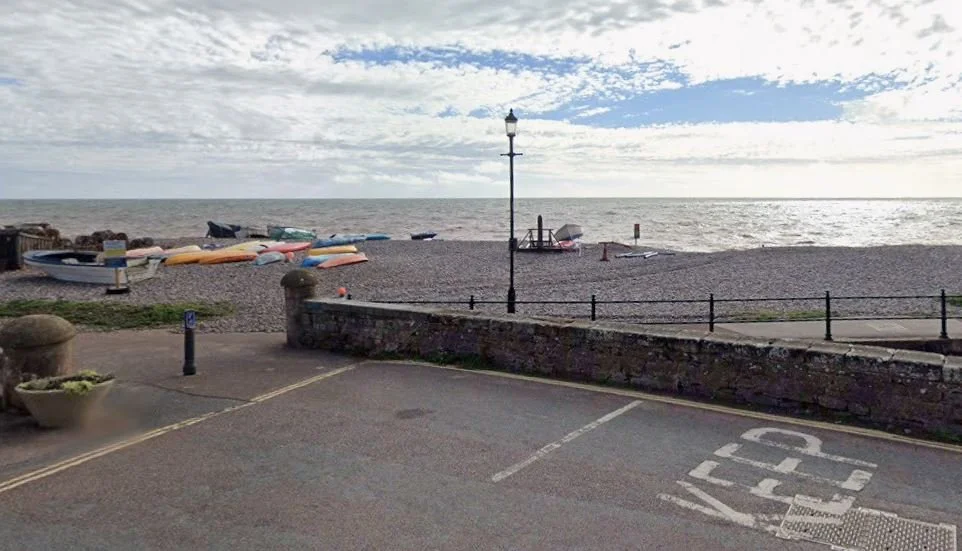
The sea wall at Budleigh Salterton that was the setting for Millais’ painting (a blue plaque on the left of the wall commemorates the event).