Ralegh in the Tower of London
Ralegh in the Tower of London
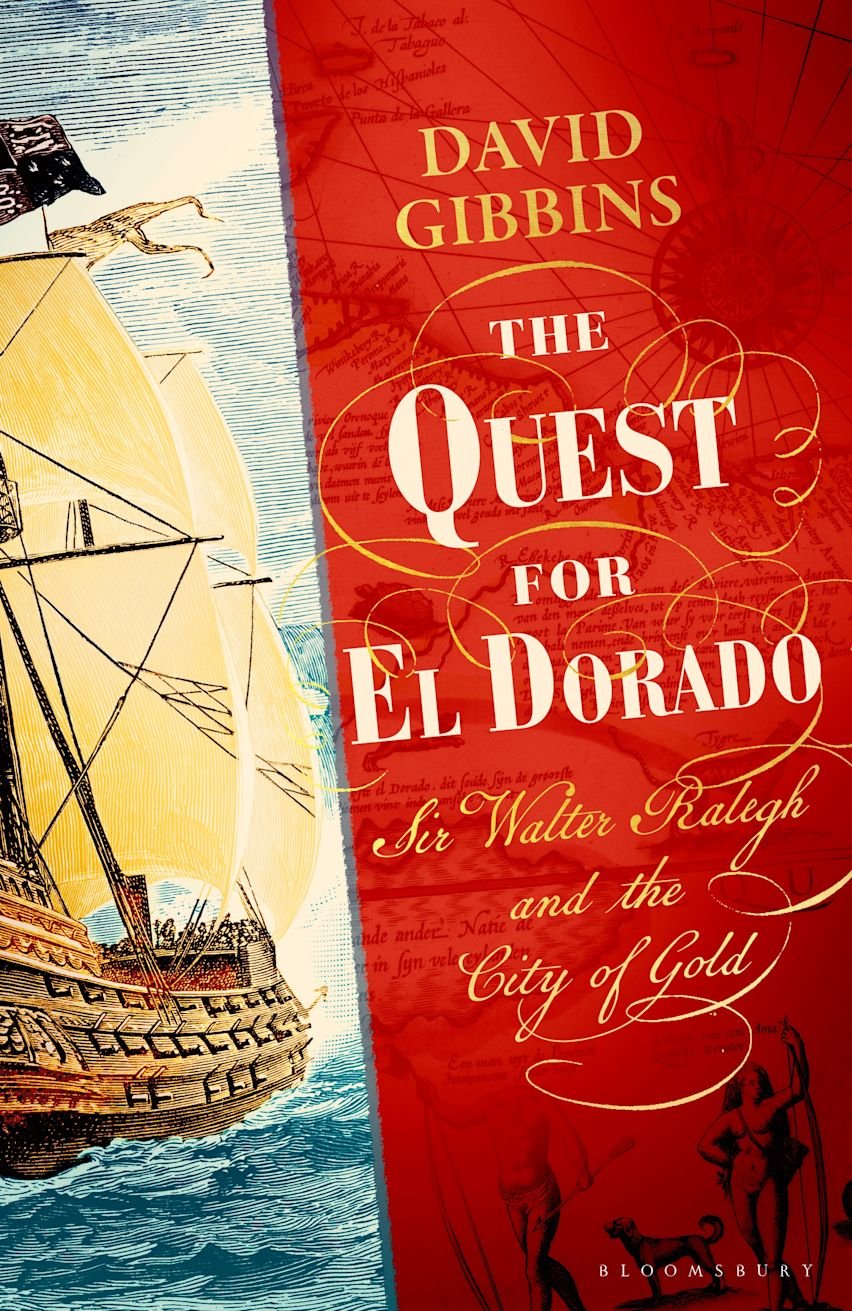
While I was writing The Quest for El Dorado I visited the Tower of London to spent time in the Bloody Tower, where Sir Walter Ralegh was imprisoned from July 1603 until February 1616 (when he was allowed to move to his nearby London home, though he was not given a conditional pardon until the following January). His room there, presented as it may have been during his imprisonment, was the place where he wrote his Historie of the World and planned further expeditions to the New World. One thing that is missing is the library of more than 500 books that we know he had with him from a list of titles in his ‘commonplace book’ in the British Library. Another library, possibly even larger, was held in the Martin Tower by his close friend Henry Percy, the ‘Wizard Earl’, who was imprisoned in the Tower from 1605 to 1621. Today the Tower of London is mainly remembered as a castle, armoury and prison, but the friendship of those two men – along with others who visited them in the Tower and helped with their projects, including the polymath Thomas Harriot – meant that for a decade or so in the early 17th century it was one of the intellectual powerhouses of England, a place where Ralegh was able to explore many areas of scholarship and write more than a million words on history and other subjects - while not losing sight of his dream of El Dorado.
Click on the images to enlarge.
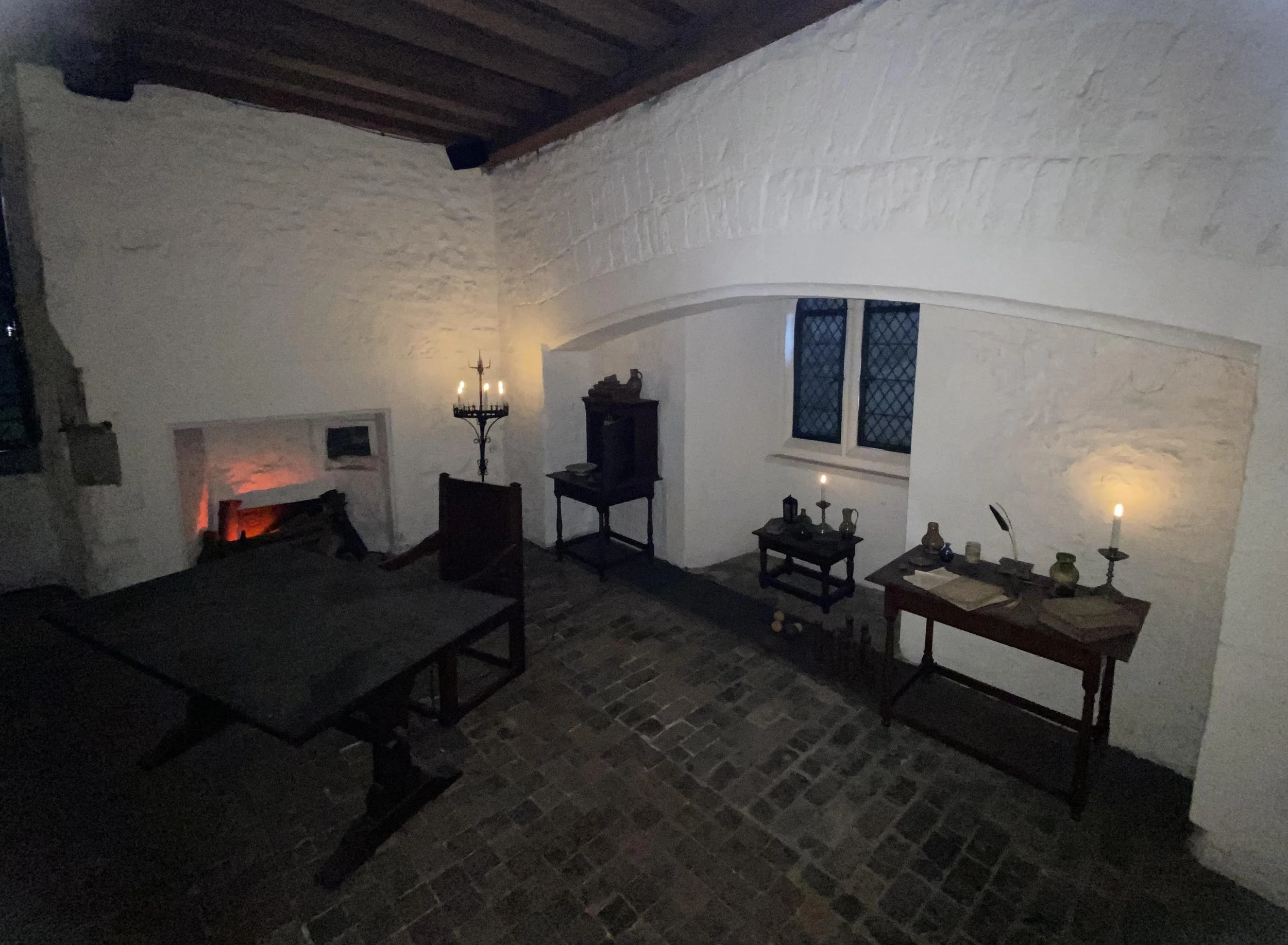
This is the room in the Bloody Tower where Ralegh spent much of his time from 1603 to 1616, with period furniture added (photo: David Gibbins).
View south from within the Tower of London towards the Bloody Tower, site of Ralegh’s imprisonment from 1613 to 1616 - his study was behind the lower window and his bedroom on the floor above. To the right is the ‘Lieutenant’s Garden’ (the ‘Lieutenant of the Tower’ was the warden), given over to Ralegh to be his personal garden, and above that ‘Sir Walter Ralegh’s Walk’ on the walls. The tower lies over a vaulted passageway through which prisoners were taken into the Tower of London from the Traitors’ Gate on the Thames (photo: David Gibbins).
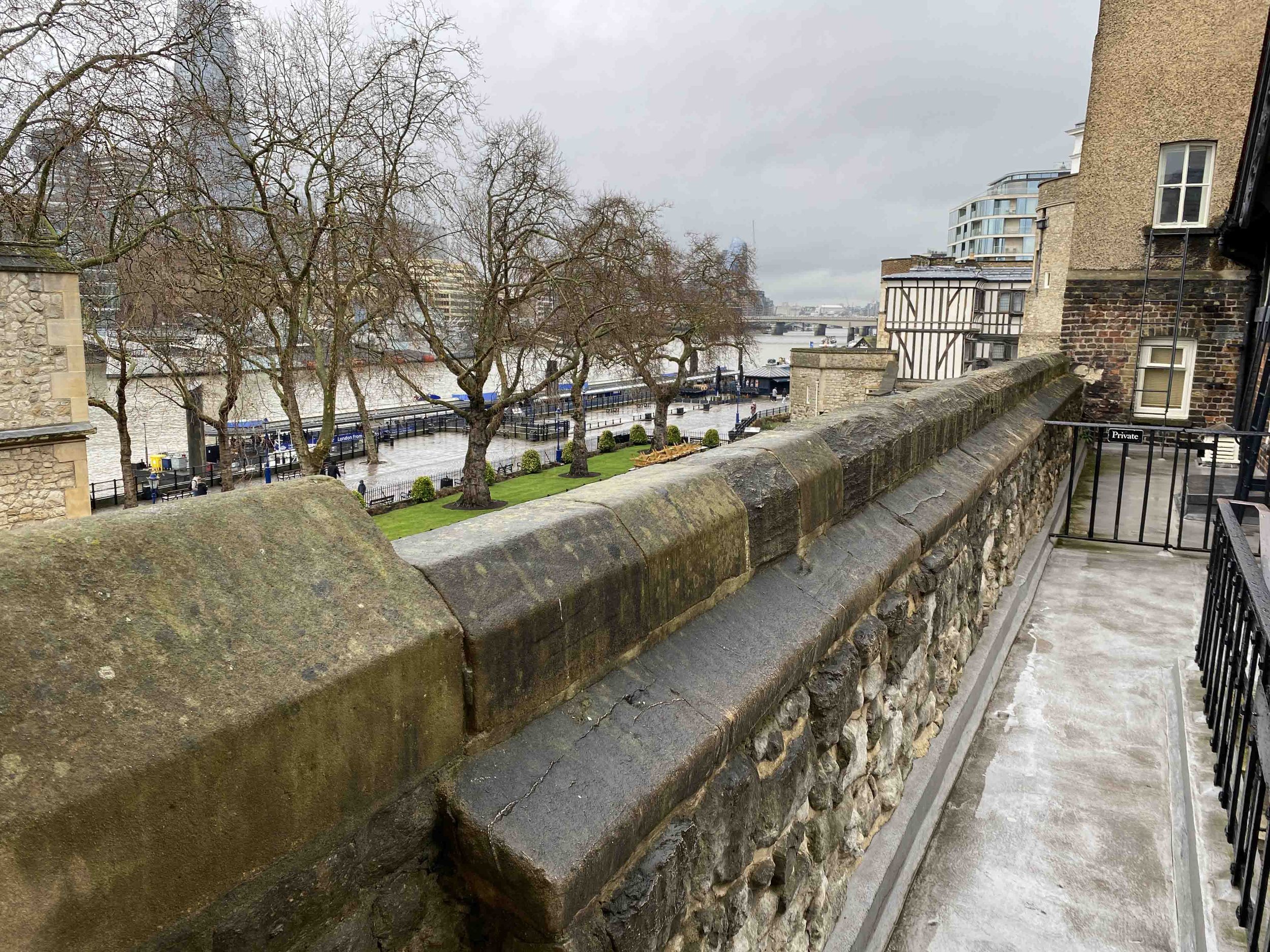
View west over the Thames from ‘Sir Walter Ralegh’s Walk’, immediately in front of the entrance to his chambers in the Bloody Tower. From here, Ralegh would have been able to watch ships coming and going on the Pool of London, some of them offloading cargo to be taken by lighter further upriver under London Bridge in the background (photo: David Gibbins).
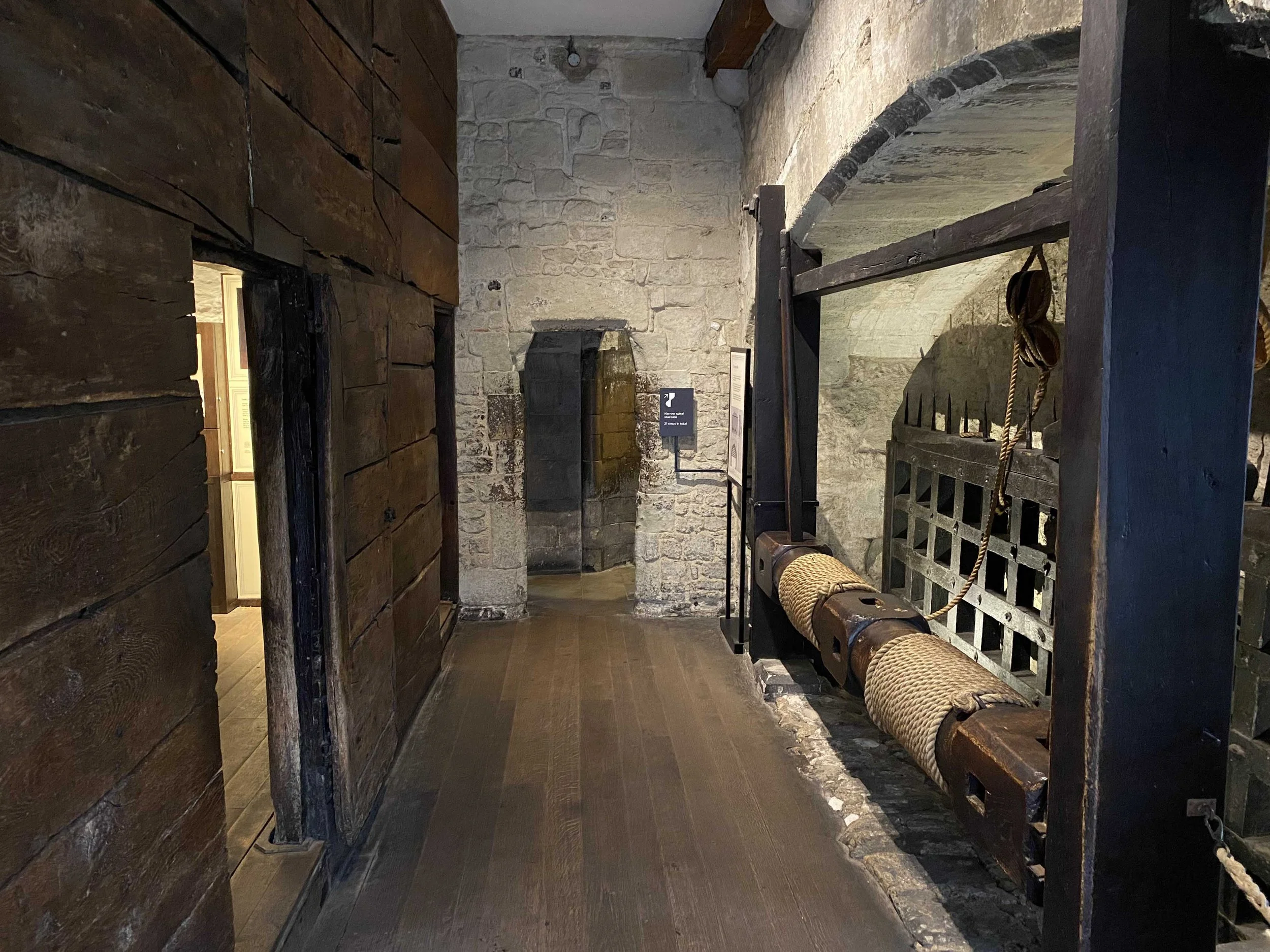
View just inside the entrance to the Bloody Tower looking east, with Ralegh’s study to the left and the portcullis to the right. The operation of the portcullis would have been noisy and the room draughty and cold, so the wooden wall to the left was built as a barrier. It may have been part of improvements known to have been carried out in 1605-6 to make the tower more comfortable for Ralegh (photo: David Gibbins).
The Martin Tower, where Ralegh’s friend Henry Percy, the ‘Wizard Earl’, had his rooms and library. Ralegh could have reached him along the wall walk here. The sundial (its face restored in 1988) was installed by Percy (photo: David Gibbins).
The ‘Face in the Tower’, discovered in 2018 after the removal of plaster in the upper chamber in the Bloody Tower. There is a good possibility that it was done during Ralegh’s time and it may even be by Ralegh himself. The subject has been a matter of speculation, but I suggest in The Quest for El Dorado that it may be one of the Indigenous people brought back by Ralegh and his captains from the Americas - at least one of them was living in Ralegh’s house in London and may have visited him in the Tower (photo: David Gibbins).